Hand-cut Tyvek, acrylic paint; framed
Prayers in 8 religions and cultures:
Bahai,ism, Buddhism, Christian, Hinduism, Islam, Jainism, Judaism, Native American
You can choose one or more of these prayers or the entire collection.
18.75 × 18.75 inches for each prayer
Copyright Linda Ekstrom
Artist Statement: I work with text in ways that challenge legibility in order to bring words into the space of visual art. Graphic artists, typographers, and conceptual artists from the sixties, have informed my practice for the ways they blur the boundaries between reading, writing and making. Words are the language of writers, poets and designers, yet many visual artists also work with words, composing them as imagery and objects.
I explore three strategies for using words in visual ways: deciphering literacy, symbolic and iconographic association, and fragmentation and reordering.
Deciphering is the way we uncover and translate meaning. In many of my text works the viewer must grapple with the order, unscramble, or read through the layers in order to decipher what the words are saying.
Symbolic and iconographic associations depend on a system of understanding on the part of a group. Many of my altered book works, such as the altered Bibles, have inherent cultural, historical, and religious meaning that is dependent upon being readable. Can books be interpreted in new forms that express symbolic meaning beyond intellectual understanding? Can a tangle of words serve as an icon?
Fragmentation and reordering occur when I cut apart, erase, or alter texts. Reordering of the fragments means readability is converted into another state, or another way of reading. What happens to the potency of that original meaning when severed from, reordered or condensed into a new state? What is missing or scrambled can become a catalyst of something new.
Readability is a broad term applied to the way we interpret the world around us. How much latitude do we have with the legibility of text? For the most part, by fragmenting, reordering and overlaying words, my text works are often no longer readable in the conventional way. I am teasing at illiteracy to achieve a visual literacy.
Hand-cut Tyvek, acrylic paint; framed
Prayers in 8 religions and cultures:
Bahai,ism, Buddhism, Christian, Hinduism, Islam, Jainism, Judaism, Native American
You can choose one or more of these prayers or the entire collection.
18.75 × 18.75 inches for each prayer
Copyright Linda Ekstrom
Artist Statement: I work with text in ways that challenge legibility in order to bring words into the space of visual art. Graphic artists, typographers, and conceptual artists from the sixties, have informed my practice for the ways they blur the boundaries between reading, writing and making. Words are the language of writers, poets and designers, yet many visual artists also work with words, composing them as imagery and objects.
I explore three strategies for using words in visual ways: deciphering literacy, symbolic and iconographic association, and fragmentation and reordering.
Deciphering is the way we uncover and translate meaning. In many of my text works the viewer must grapple with the order, unscramble, or read through the layers in order to decipher what the words are saying.
Symbolic and iconographic associations depend on a system of understanding on the part of a group. Many of my altered book works, such as the altered Bibles, have inherent cultural, historical, and religious meaning that is dependent upon being readable. Can books be interpreted in new forms that express symbolic meaning beyond intellectual understanding? Can a tangle of words serve as an icon?
Fragmentation and reordering occur when I cut apart, erase, or alter texts. Reordering of the fragments means readability is converted into another state, or another way of reading. What happens to the potency of that original meaning when severed from, reordered or condensed into a new state? What is missing or scrambled can become a catalyst of something new.
Readability is a broad term applied to the way we interpret the world around us. How much latitude do we have with the legibility of text? For the most part, by fragmenting, reordering and overlaying words, my text works are often no longer readable in the conventional way. I am teasing at illiteracy to achieve a visual literacy.
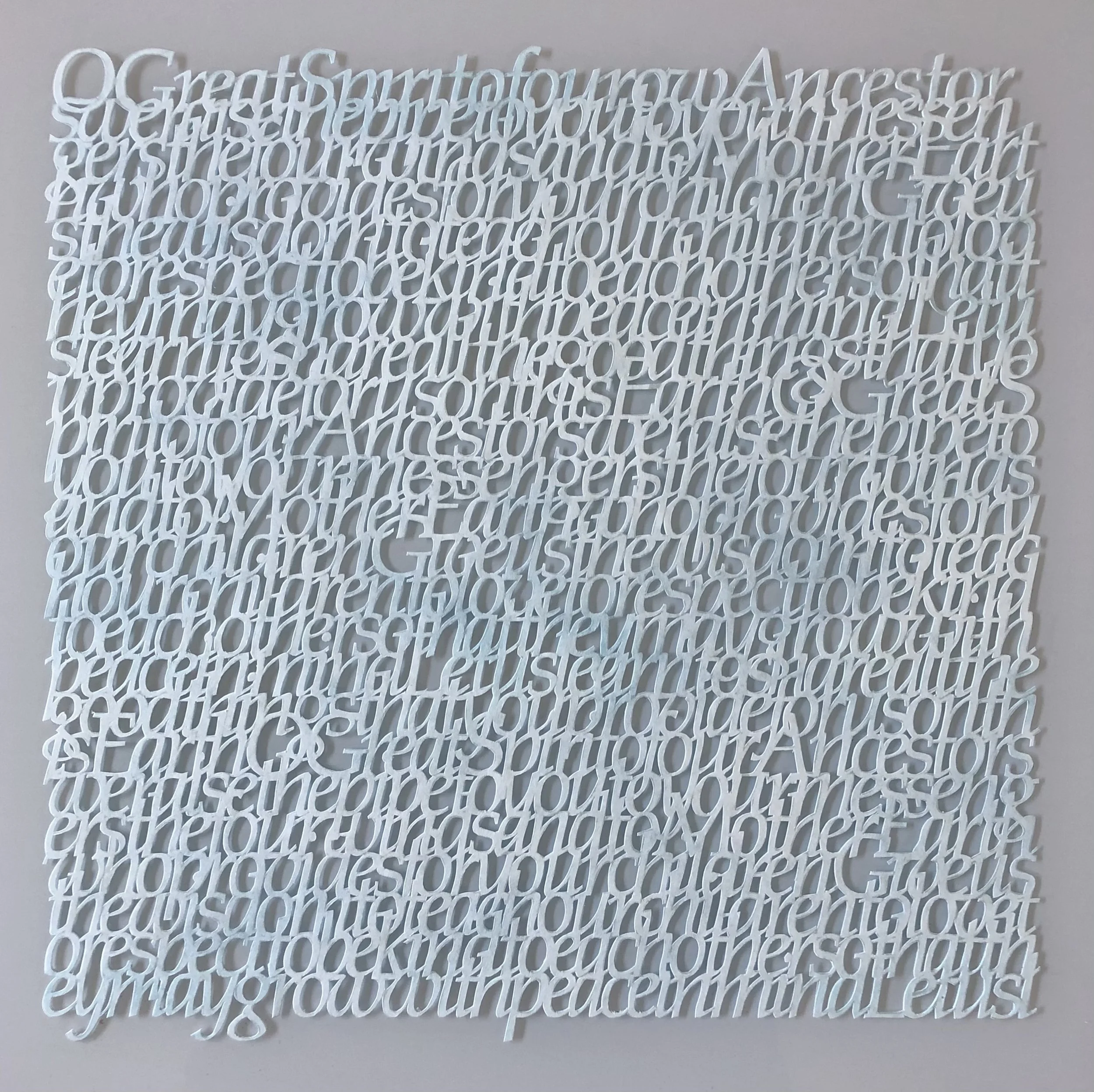 Image 1 of 11
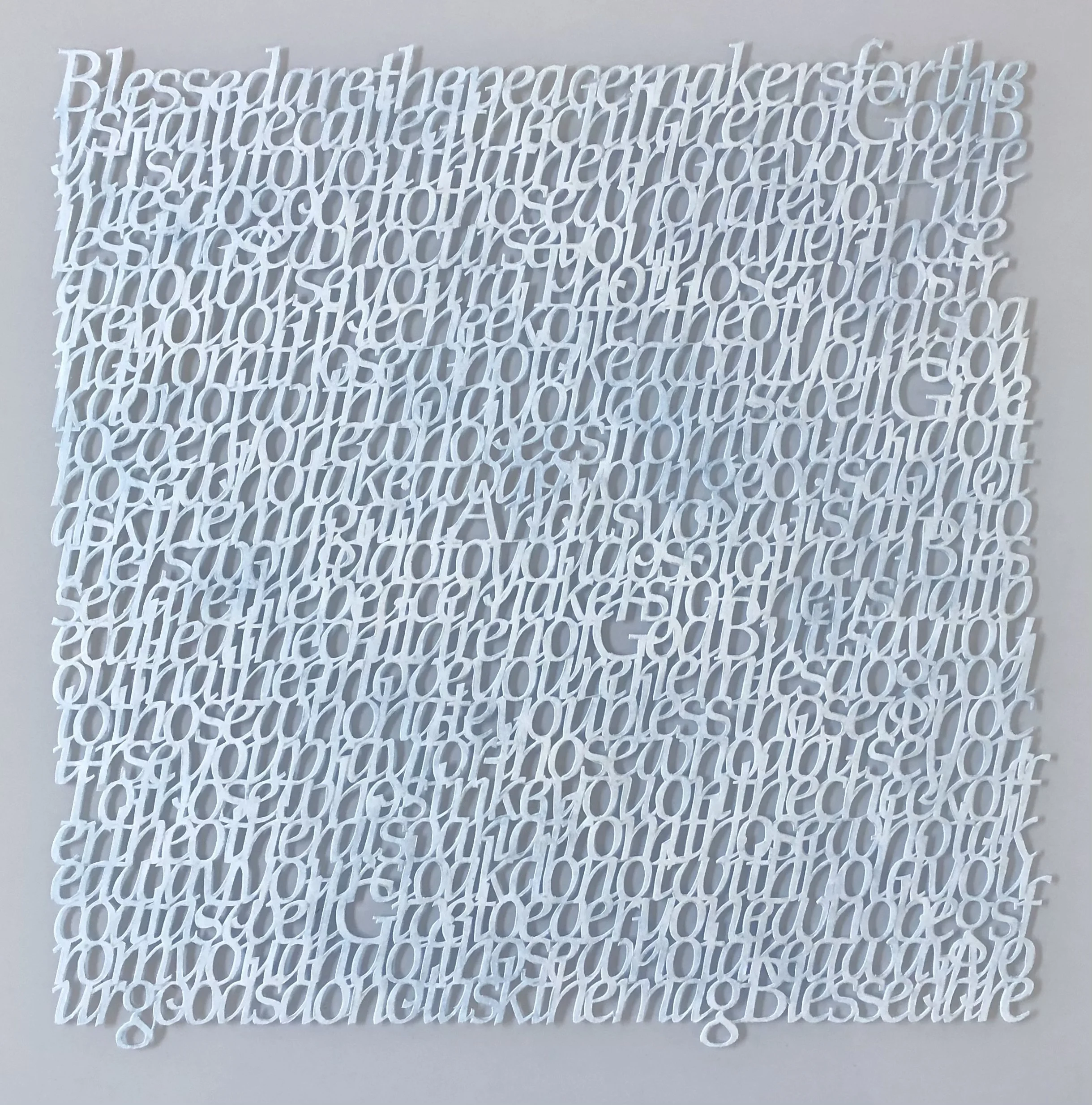 Image 2 of 11
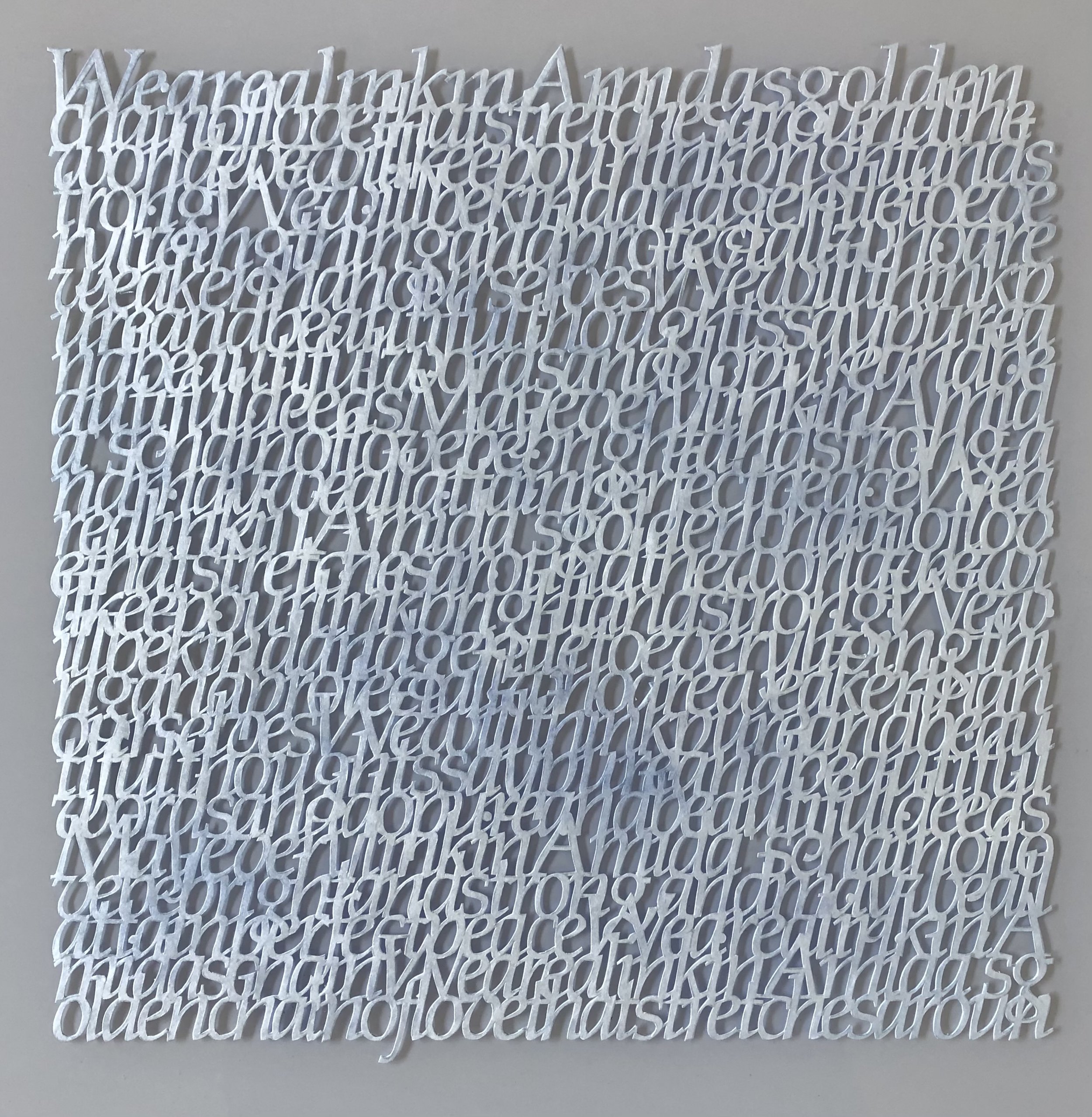 Image 3 of 11
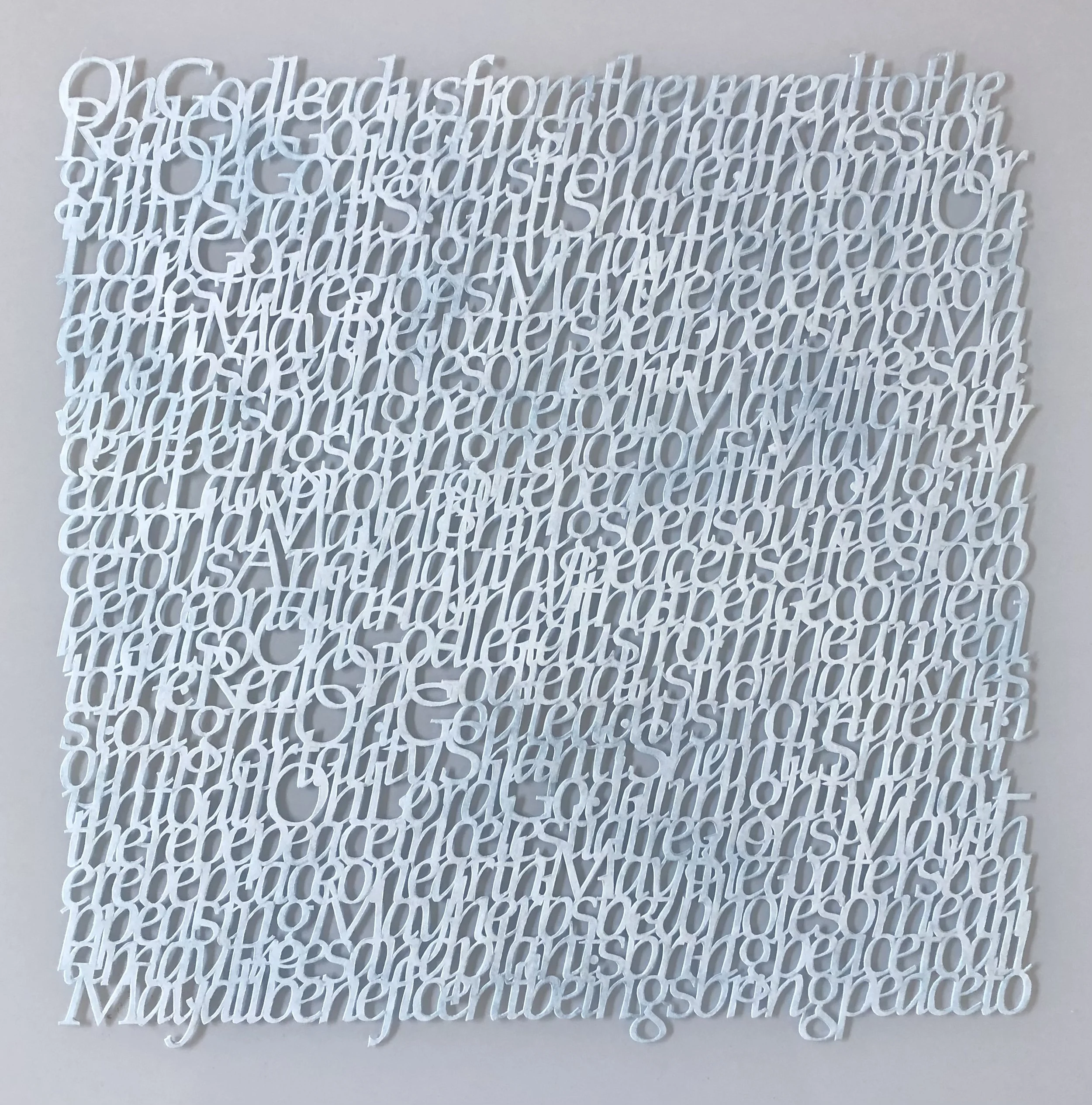 Image 4 of 11
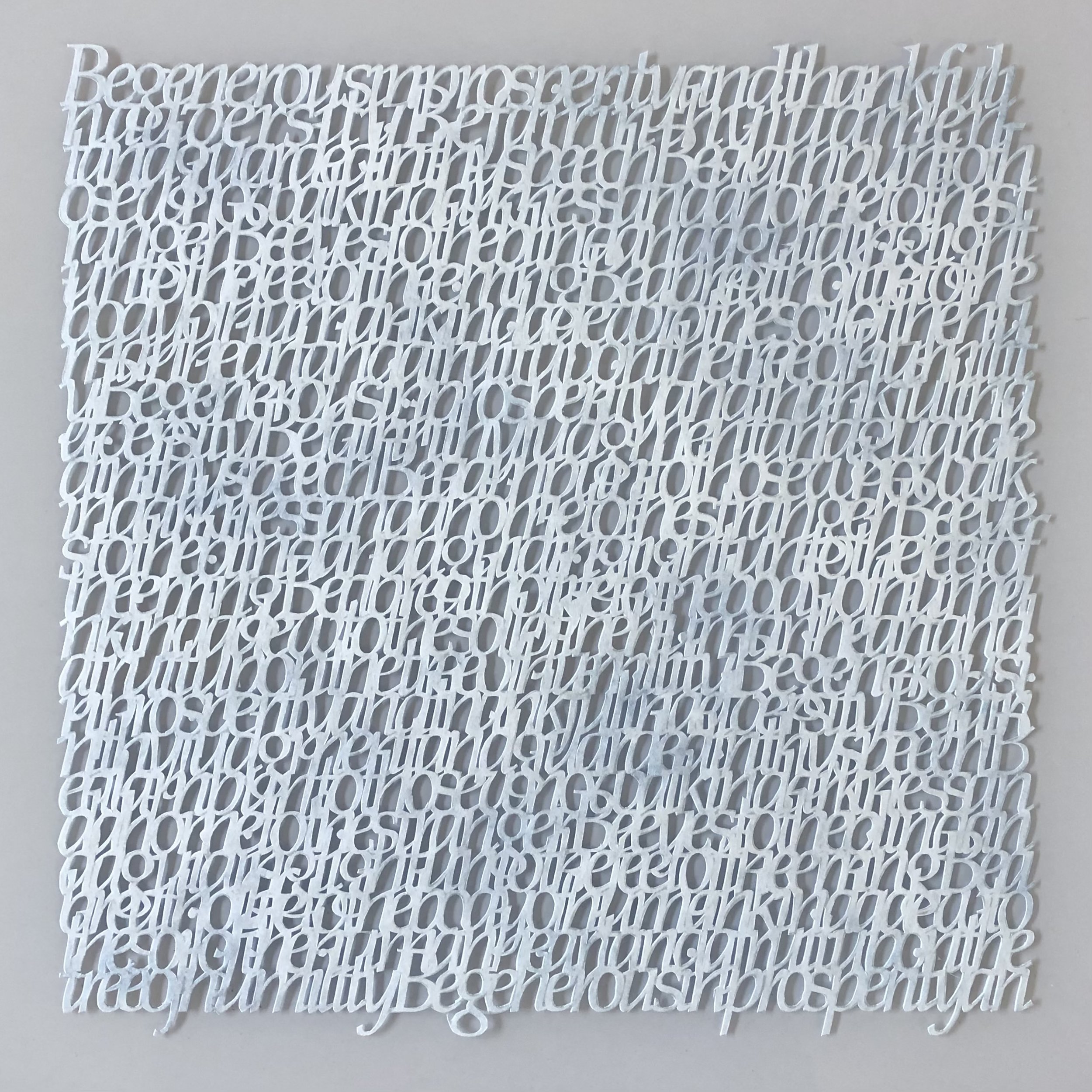 Image 5 of 11
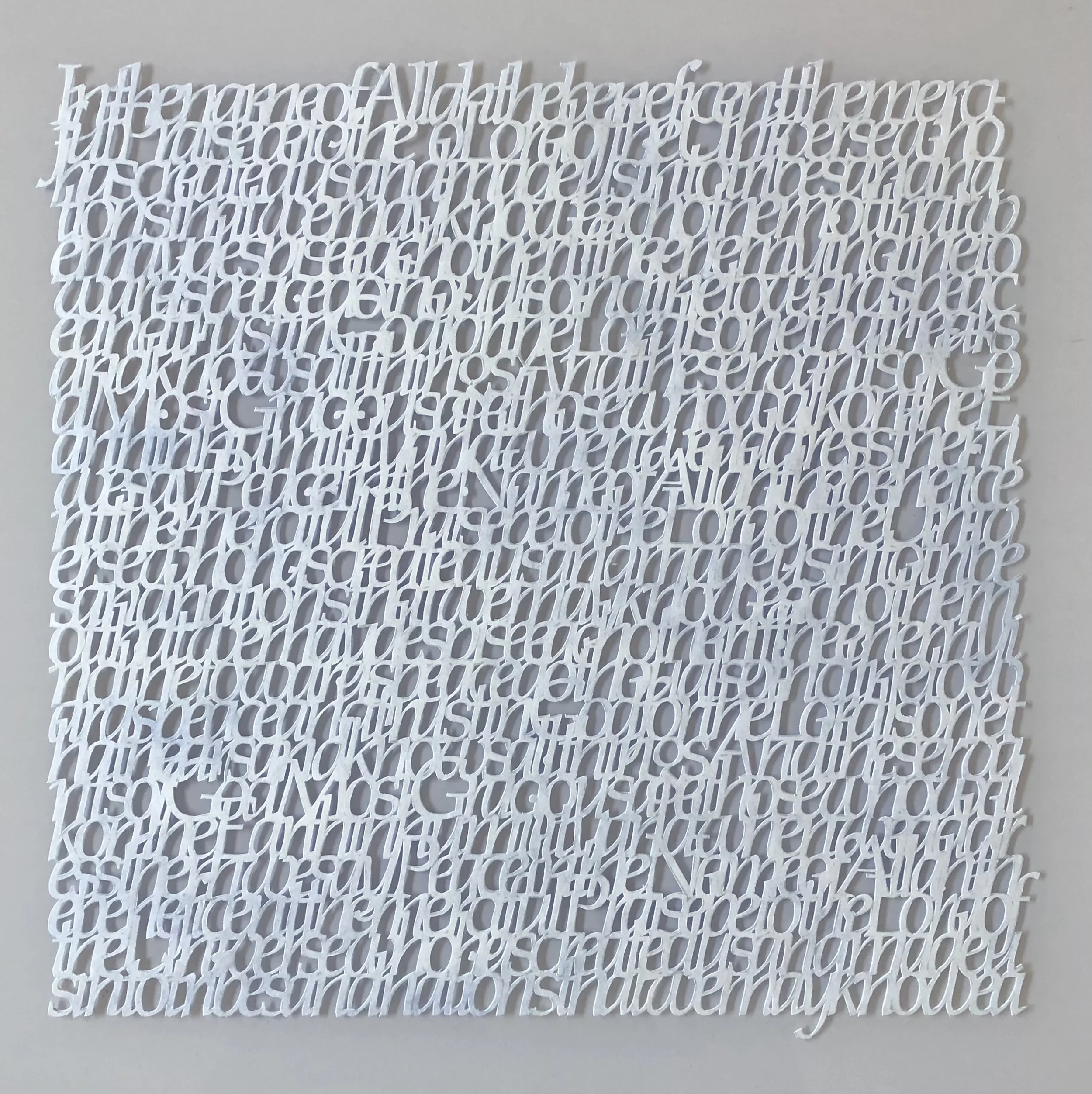 Image 6 of 11
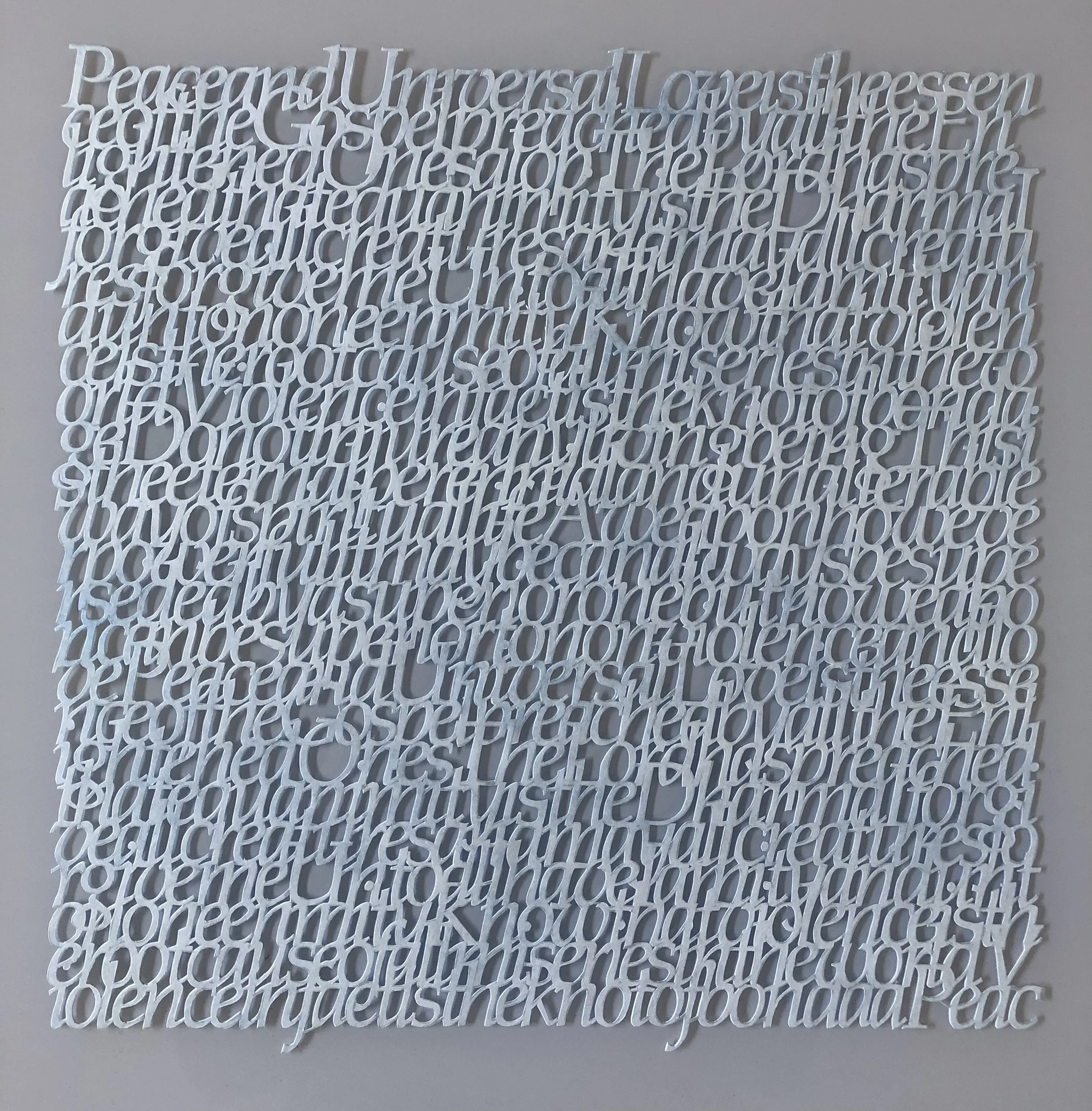 Image 7 of 11
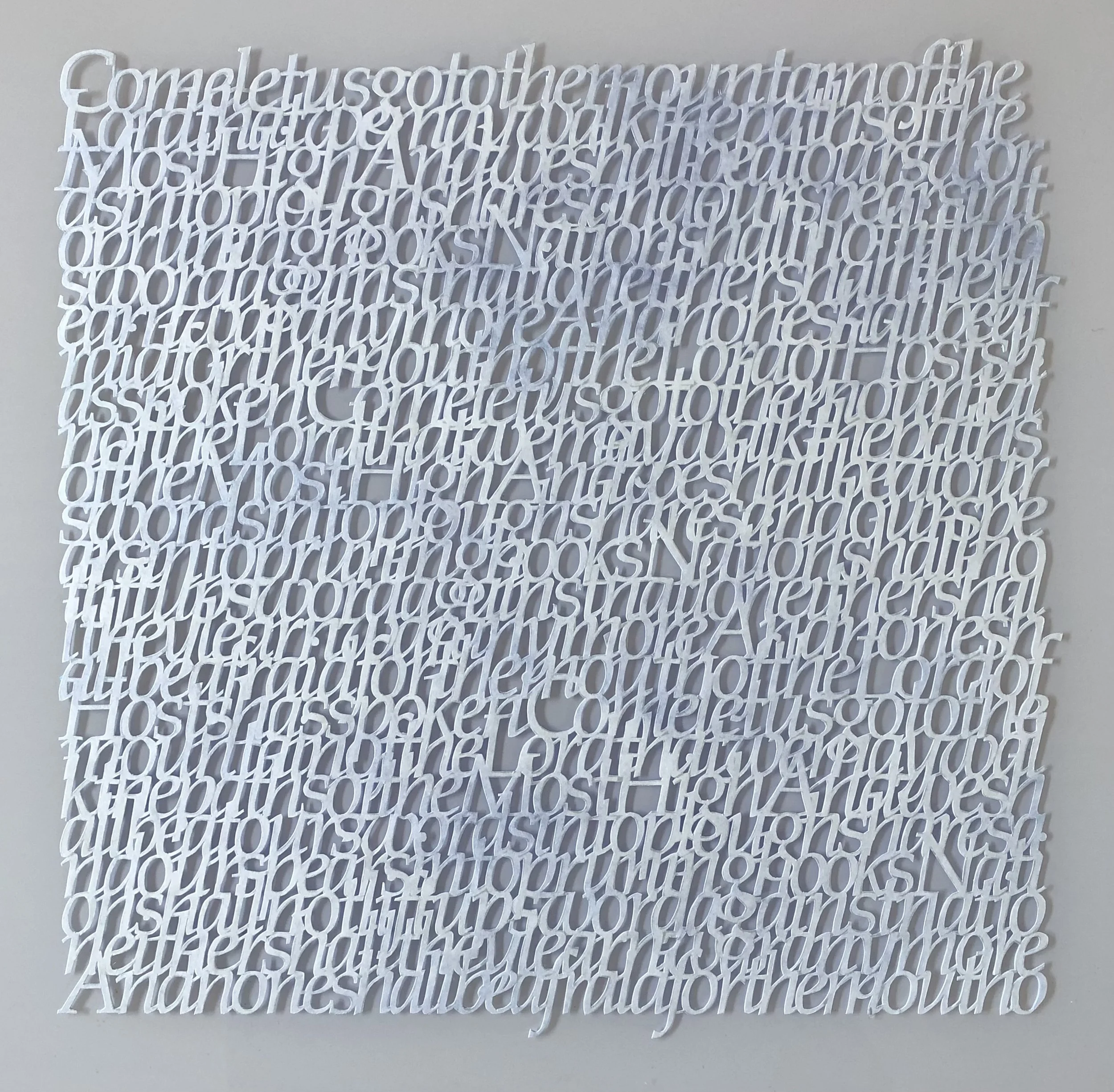 Image 8 of 11
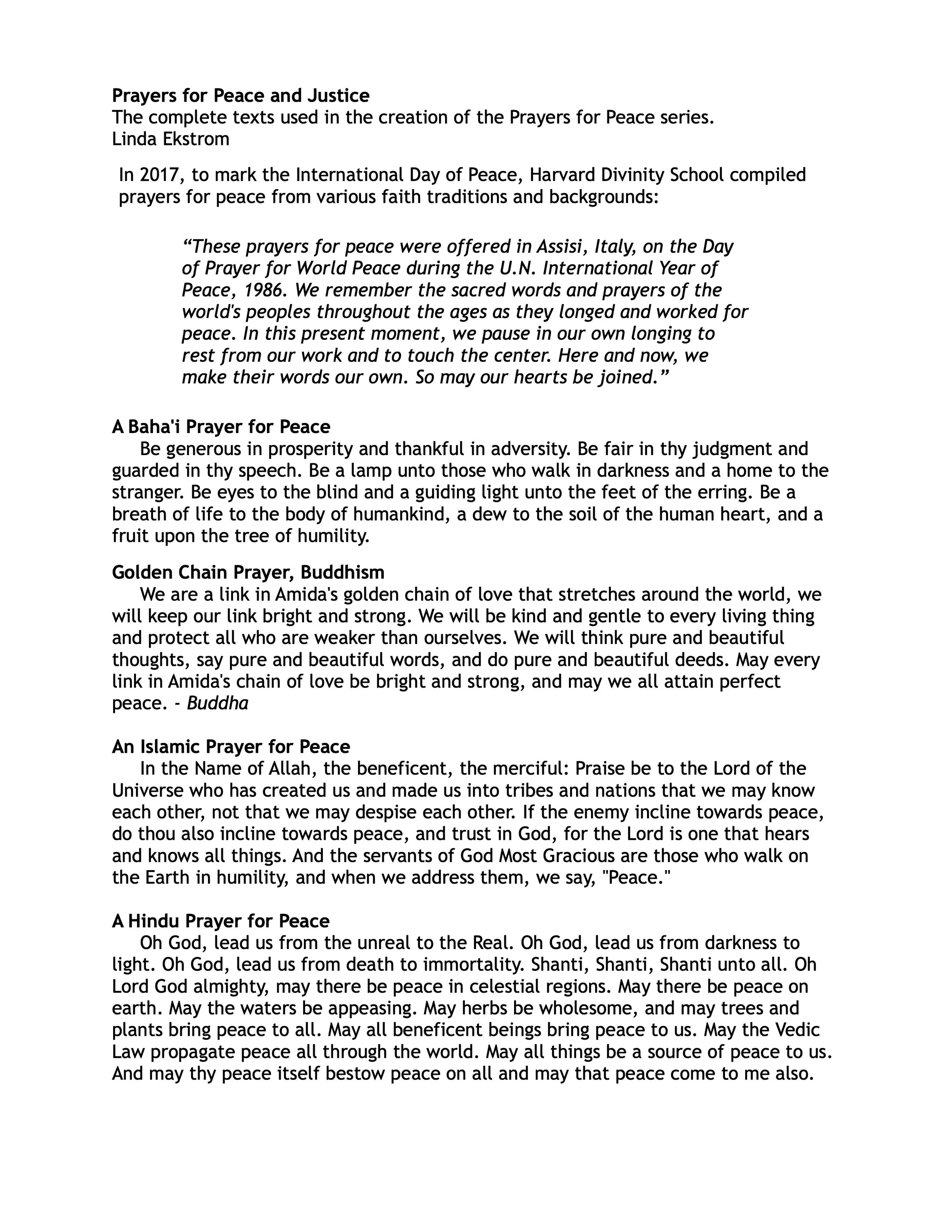 Image 9 of 11
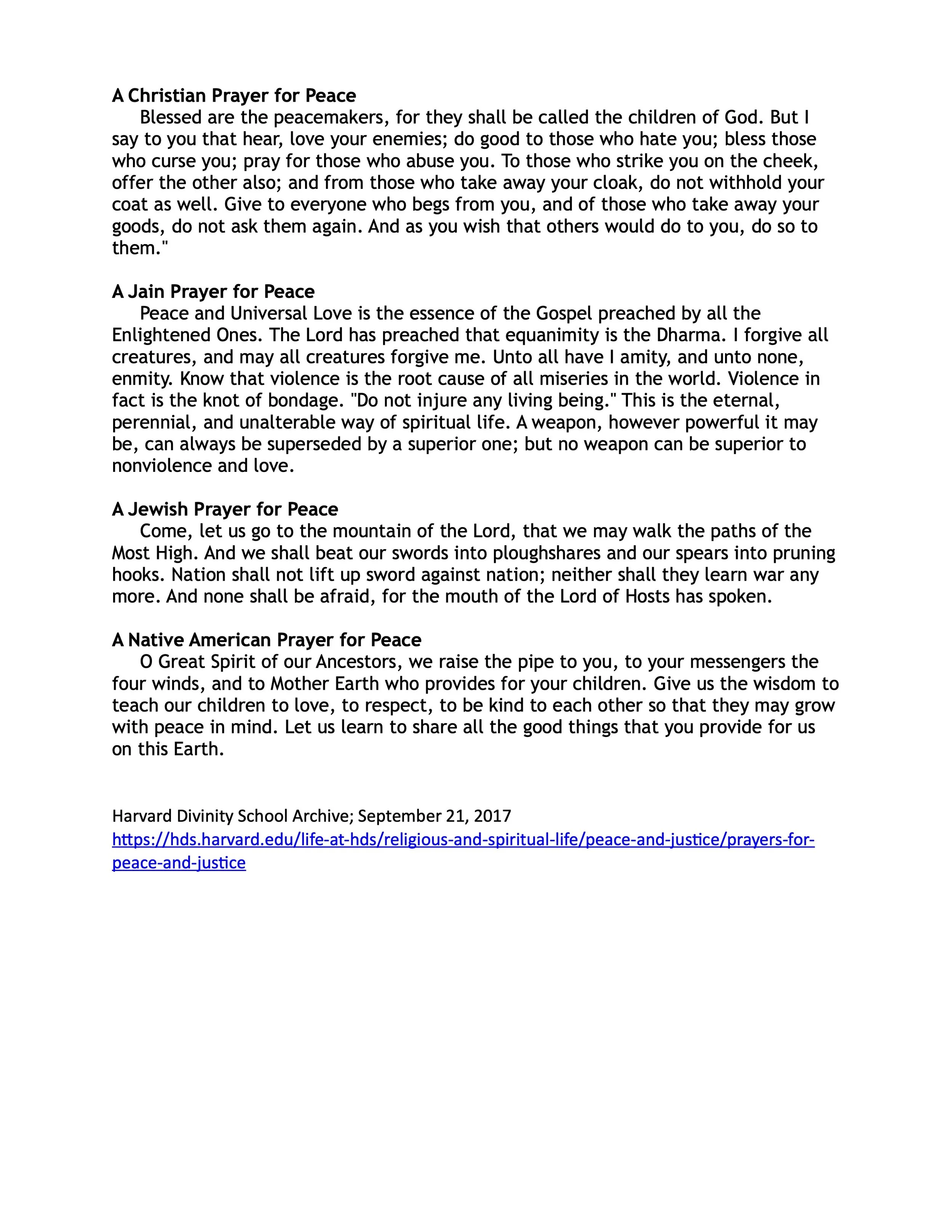 Image 10 of 11
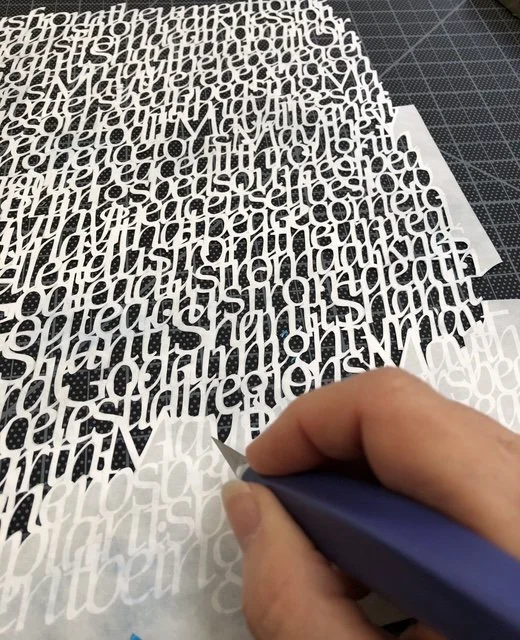 Image 11 of 11